About Ilê Axé Capoeira
Capoeira, vision, values, and the founders of Ilê Axé Capoeira.
The Art of Capoeira
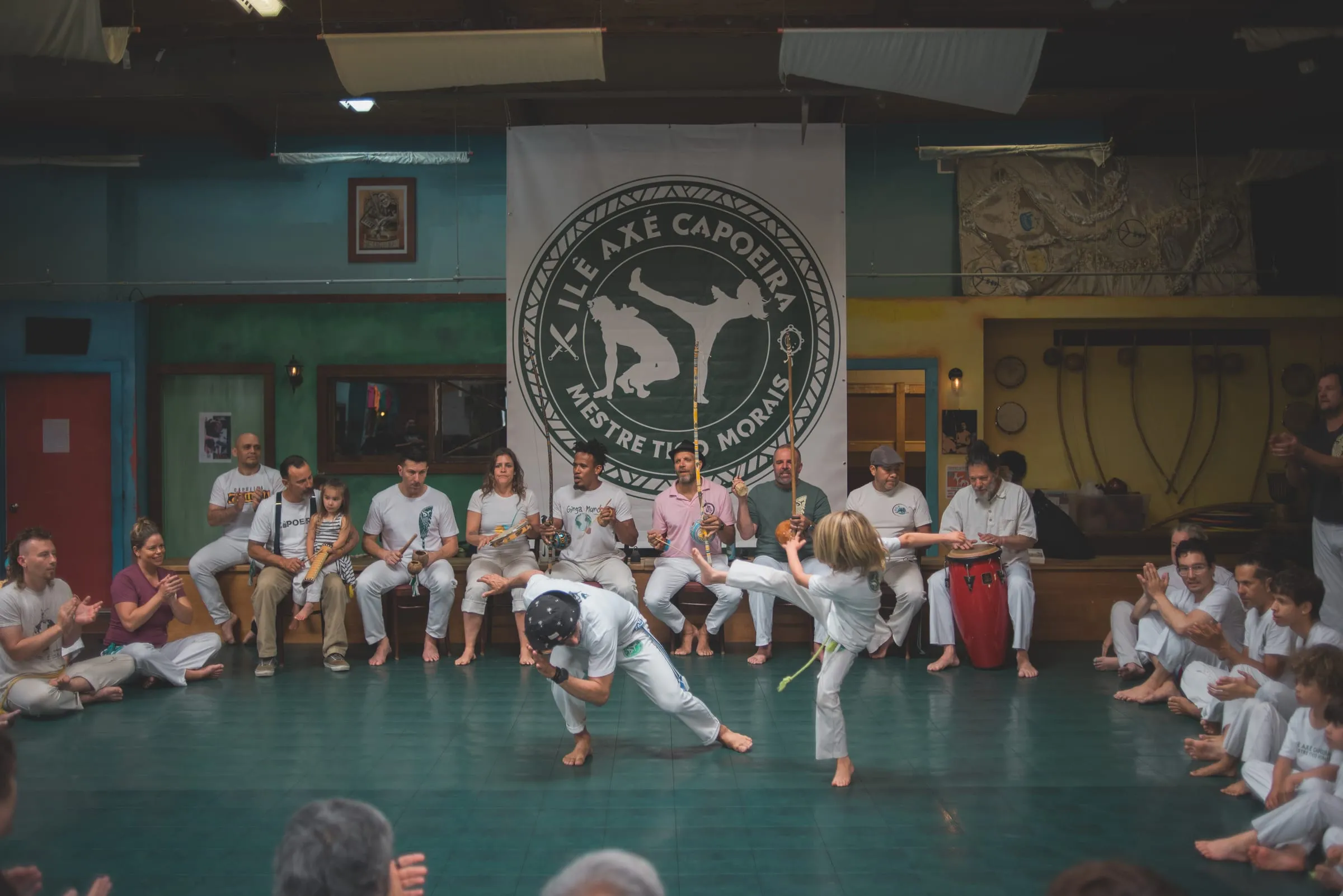
Capoeira is an Afro-Brazilian art form that occupies multiple realms simultaneously. At any and every moment, capoeira manifests itself as a game, a martial art, a dance, a ritual, and a cultural expression driven by music and a collective sharing of space. Beginners and more experienced practitioners alike may be drawn to different elements of the art form depending on their personal interests and inspiration, but one thing is certain – capoeira is open to anyone and everyone who wants to learn.
Capoeira is an Afro-Brazilian art form born from the resilience of enslaved West Africans in Brazil. It blends martial arts, dance, music, and play into a practice that is at once a game, a fight, a ritual, and a creative expression — open to anyone who wants to learn.
The roots of capoeira as it is recognized today can be traced back to the mid-16th century, when people from West Africa were forcibly taken to Brazil by Portuguese slave traders. Despite their inhumane living conditions and the constant threat of punishment, many of these enslaved Africans maintained traditions of ancestral dances, music, and combat games (such as the Angolan game engolo) while in captivity. The mix of these diverse African cultural expressions present in Brazilian slave communities began to coalesce into a uniquely Afro-Brazilian art form with the first generation of Brazilian-born African descendents. This Afro-Brazilian evolution of West African dance and combat traditions would become the first iteration of what is known as capoeira today.
As capoeira continued to evolve through the end of slavery in Brazil (1888), the art form began to be associated with its more combative elements. Capoeiristas (capoeira practitioners) were often used as security guards for wealthy Brazilians due to their fighting prowess, and were even used by political parties to intimidate and commit acts of violence against their opponents. This association with violence and lawlessness eventually led the Brazilian government to outlaw the practice of capoeira nationwide in 1890.
For the next 44 years, capoeira was practiced in secret in a variety of different ways. In the Brazilian state of Bahia, however, capoeiristas maintained strong musical and ritualistic elements of the art form, and in 1932 famed capoeira master Mestre Bimba created the first academy specializing in capoeira in Bahia’s capital city of Salvador. After codifying and “legitimizing” the practice of capoeira in the eyes of the Brazilian middle and upper classes, Mestre Bimba organized a cultural presentation for Brazilian president Getúlio Vargas in order to show that capoeira was much more than just a violent fight. Moved by this presentation, President Vargas legalized the practice of capoeira nationwide beginning in 1934.
Legalization ushered in the modern era of capoeira as we know it now, and opened the door for other hugely influential masters, such as Mestre Pastinha (who created the Centro Esportivo de Capoeira Angola in 1941), to establish ideas and philosophies that are practiced around the world to this day.
The creation, survival, and continued evolution of capoeira as an art form is a testament to the centuries-old resilience and resistance of its practitioners and caretakers. Ilê Axé Capoeira honors the legacy of resilience and the struggle of those that fought to preserve this deeply rich and beautiful art form, and strives to create community and transform lives by applying capoeira’s timeless lessons and principles to our modern world.
Our Values
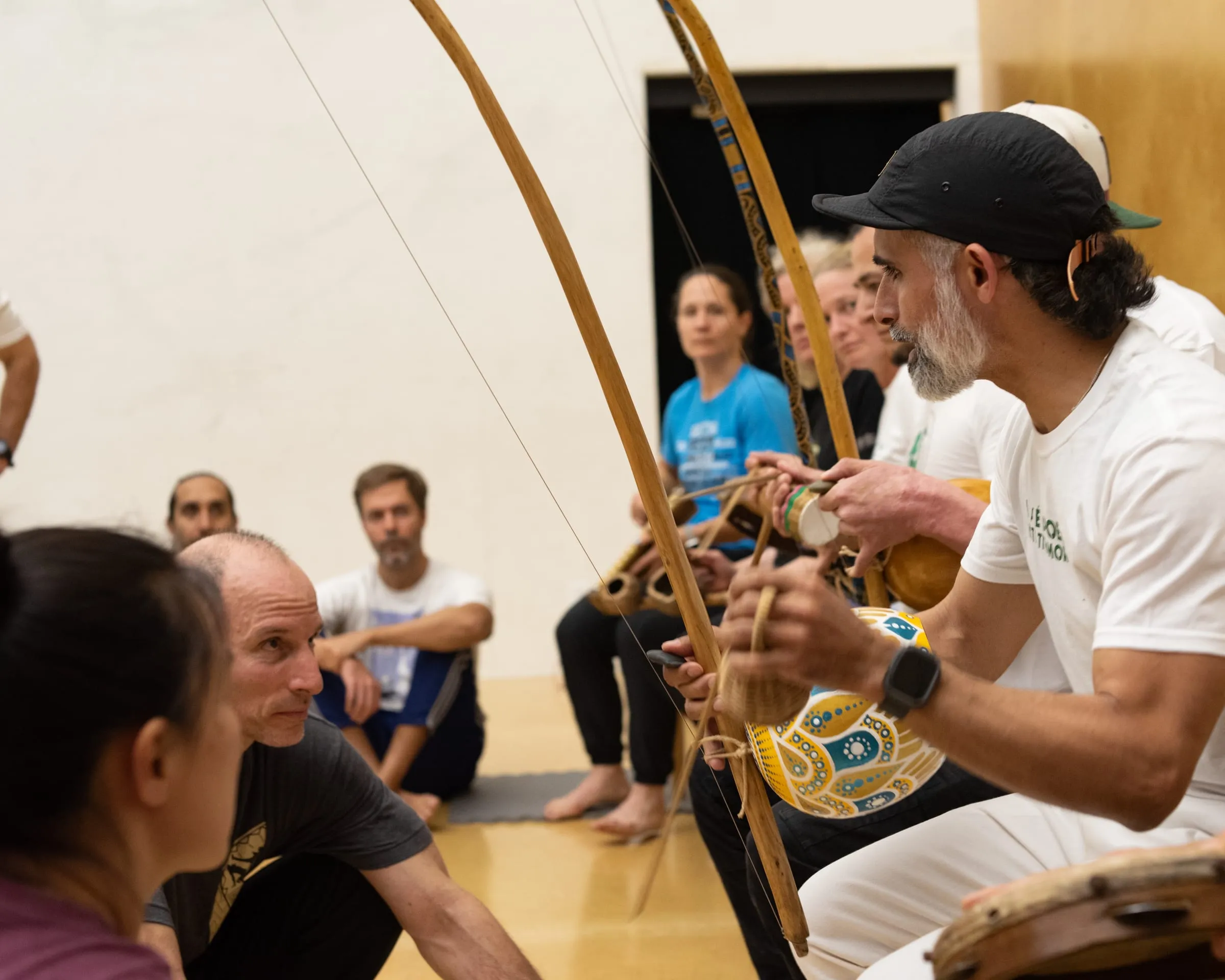
- Community: Capoeira brings people together to share in an art form that builds strong bonds and connections. We care about and take care of one another, and we believe that our lives are enriched by understanding and connecting with people from all walks of life.
- Respect: Capoeira teaches us to meet people where they are at and honor the gifts that each individual brings to the table. We treat every person with dignity, and allow our relationships to be guided by empathy and understanding.
- Empowerment: Capoeira enables us to reach our full potential in self-expression. Through the practice of this art form, we learn to break through self-imposed limits, work through our fears and insecurities, and gain the skills and experience to move through the roda (capoeira circle) and the world with confidence, ease, and respect.
- Responsibility: Capoeira asks us to take responsibility for our own actions. As practitioners of this art form, it is important that we are mindful not only of how our words and actions affect our fellow community members, but also of how our practice serves to uphold the traditions and cultural pillars of the art.
- Wisdom: Capoeira is embodied wisdom. It carries the resilience and resistance of its creators and ancestors, and teaches us about ourselves, how we move through the world, and how we show up in our relationships with others. It offers us life lessons in persistence, reciprocity, creativity, flow, and acceptance.
Our Founders
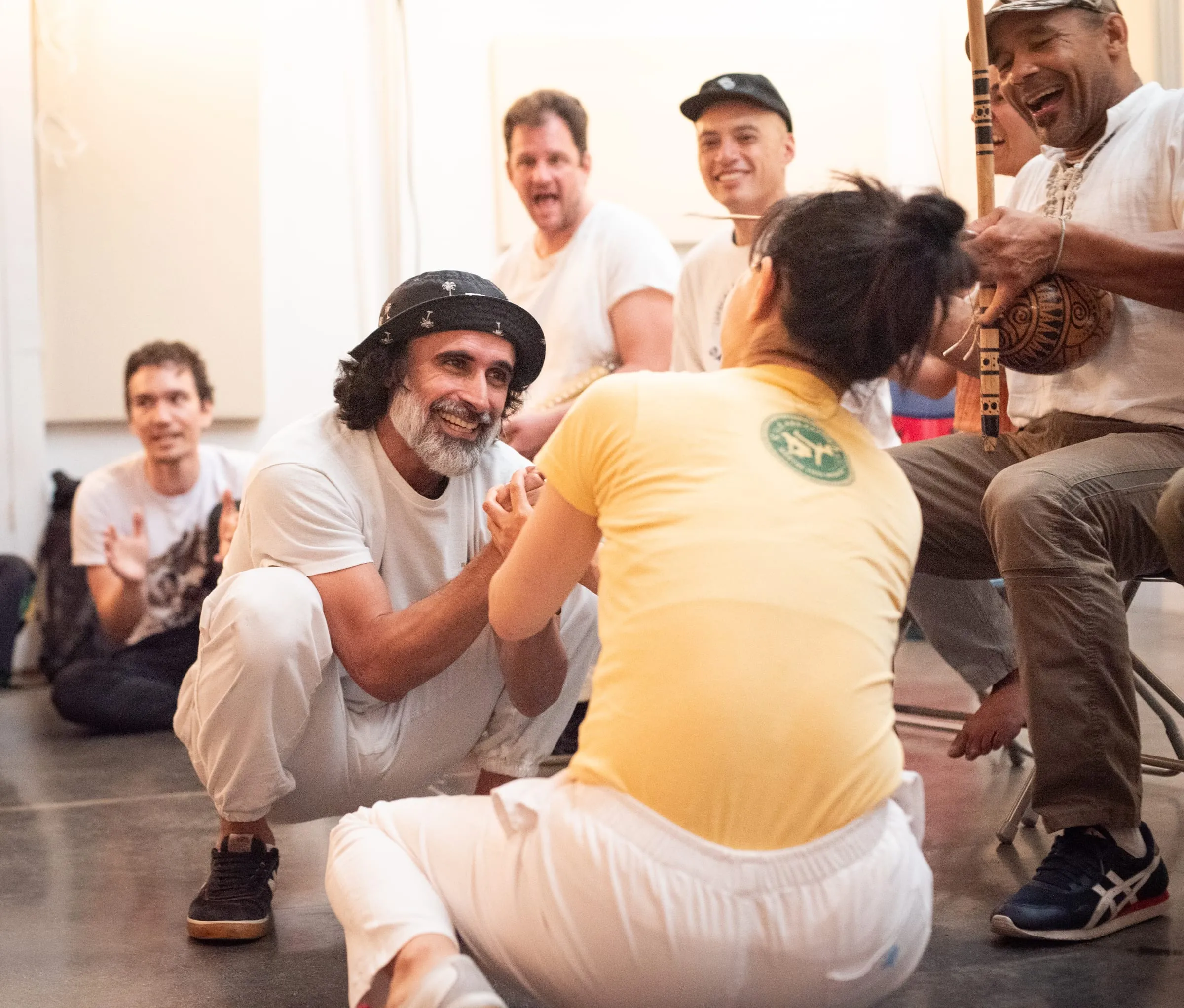
Mestre Tico
Nathanael Morais — Co-Founder & Head Instructor
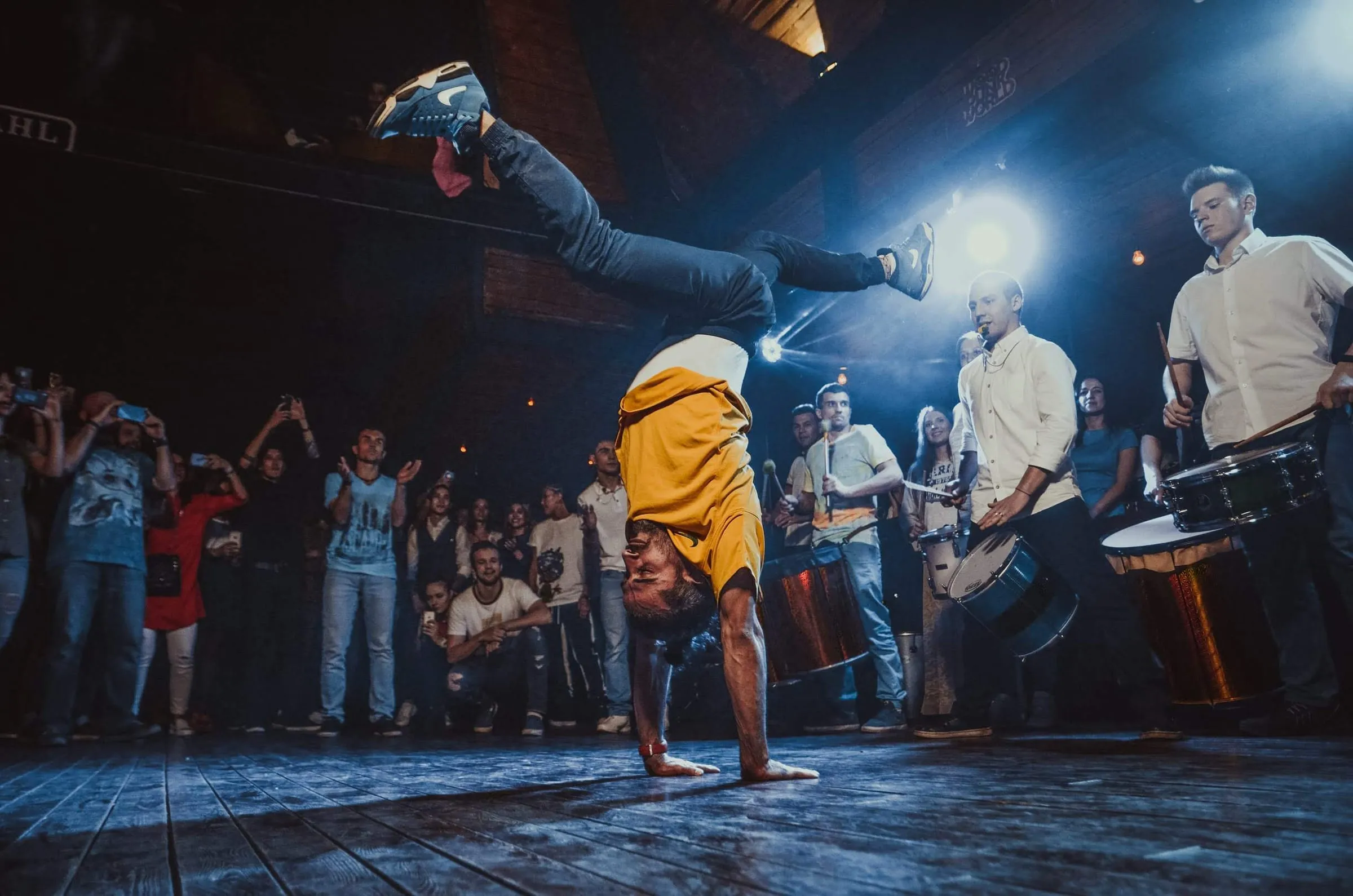
Mestre Tico (Nathanael Morais) began his capoeira journey at the age of 7 in the northeastern Brazilian city of Fortaleza, Ceará. The neighborhood where Tico spent his early years offered few opportunities for young people in the way of careers, education, or personal development, and as a result many of Tico’s childhood friends pursued life paths that ended in incarceration or worse. Fortunately, Tico was introduced to capoeira through a Ceará state-funded social project called ABC (Aprender, Brincar, e Crescer, or Learning, Playing, and Growing). The purpose of ABC was to help steer children in under-resourced areas of Fortaleza away from street life and toward positive and healthy alternatives. The capoeira instructors in ABC held a roda, or the circle in which capoeira is played, during one of their classes and Tico was immediately hooked. To this day, the energy of the roda remains Tico’s biggest artistic inspiration.
In 1996, two years after his initial introduction to capoeira, Tico participated in his first graduation ceremony. At 9 years of age, Tico was already well-versed in the foundational elements of capoeira, and by the age of 13 had begun to develop his own unique style. It was at this time that a group of international capoeira practitioners came to Ceará in order to train and soak up the rich capoeira culture found in the area. Some members of this group were part of a capoeira school in Israel, and upon meeting the young Tico were immediately impressed – so much so that they invited him to come work with them in Israel in order to generate interest in the art form among the Israeli population. In 2001, 14-year-old Tico traveled to Israel for the first time as a professional capoeirista, and has since been invited back to teach workshops over 40 times.
Mestre Tico’s connection to Israeli capoeira opened the door to a lifetime of world travel as an ambassador and renowned teacher of the art. After being formally recognized as a master (mestre) of capoeira in 2016, Tico won the World Championship of the World Capoeira Federation in Baku, Azerbaijan two years later. He has since been an invited master teacher at capoeira events in over 34 countries, including Italy, France, the United Kingdom, Germany, Latvia, Austria, Colombia, Mexico, China, Thailand, South Africa, and the United Arab Emirates. For Tico, the experience of traveling the world as a capoeira master has not only deepened his respect for the universal power and appeal of the art, but has also given him the tools and experience to relate to, connect with, and pass knowledge on to students in diverse cultures and societies. While Mestre Tico speaks four different languages, his elegant fluency in the universal language of capoeira has made him an extraordinarily effective, engaging, and sought-after representative of this beloved art form in our increasingly interconnected modern world.
Mestre Tico offers Private Training for those interested.
Professora Laurinha Rapadura
Laura Bai — Co-Founder & Instructor
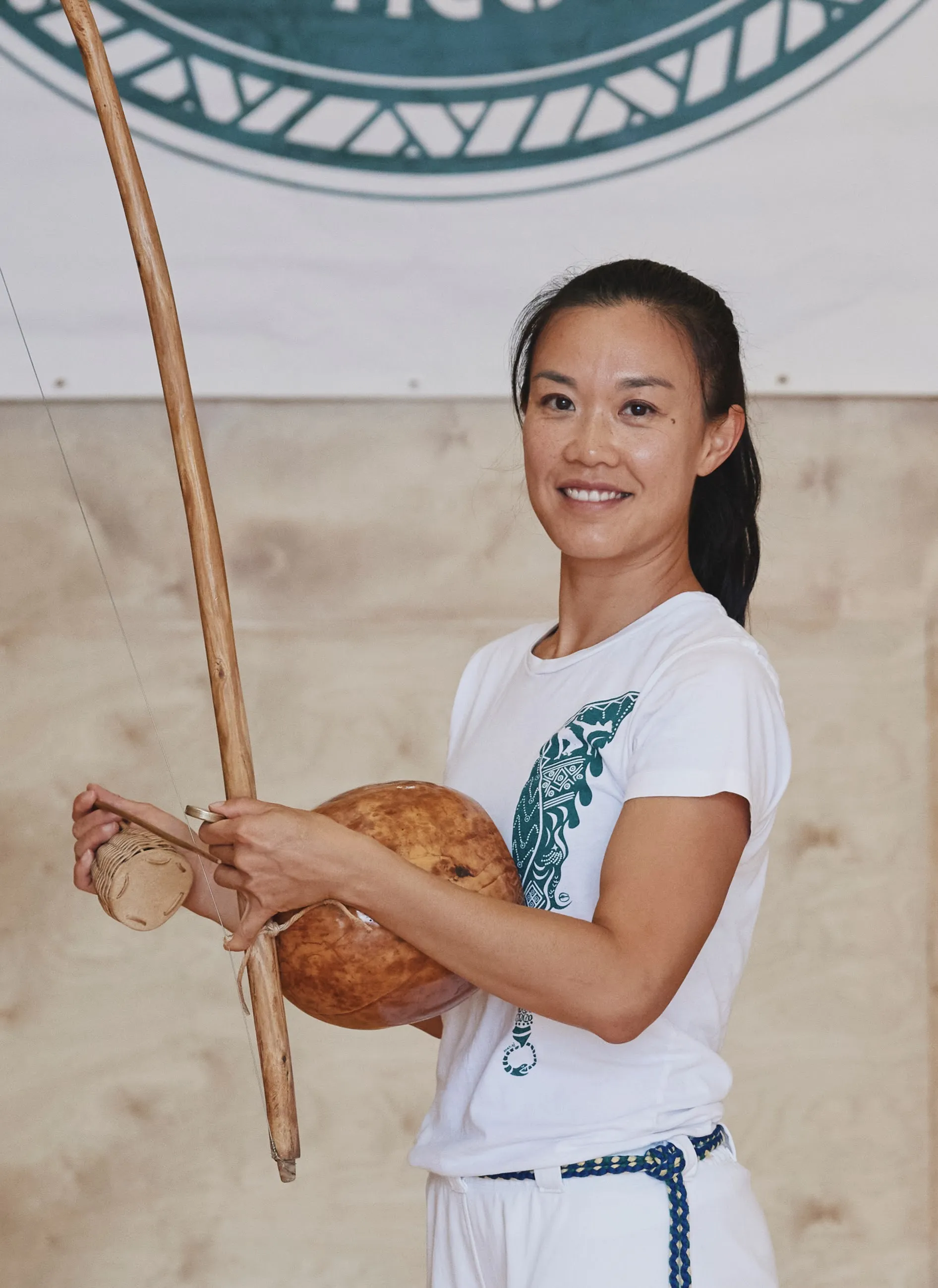
Professor Laurinha Rapadura (Laura Bai) began her capoeira journey in 2010 as part of the first generation of capoeiristas in the group Capoeira Mandinga Beijing. She immediately fell in love with the freedom of self-expression and the sense of belonging that are foundational to capoeira. Over time, she stepped into leadership and taught classes in Beijing, introducing new students to the art and helping organize rodas, workshops, and community events.
After moving to the Bay Area, Laurinha deepened her training while also becoming more involved in the community She helped organize and facilitate dialogues across local capoeira groups, creating spaces for reflection, conflict resolution, and collaborative growth. She is part of a collective that hosts weekly rodas for the community, creating an inclusive, uplifting space that welcomes all capoeiristas to connect through the art. Her work emphasizes capoeira not only as a martial art, but as a practice of collective care and empowerment — a way to strengthen relationships, identity, and community.
As her journey evolved, Laurinha cultivated a spiritual and cultural connection to capoeira through music and the study of candomblé dance and rhythms under Mestre Jorge Alabé. She also spent two years in Brazil in intensive training and cultural immersion, deepening her understanding of capoeira’s Afro-Brazilian roots and lineage.
In 2022, Laurinha and Mestre Tico co-founded Ilê Axé Capoeira with the intention of building an inclusive, empowering, and culturally grounded school. Today, Laurinha’s practice is rooted in the belief that capoeira can be a space for joy, healing, and growth — developing the body, nourishing the spirit, and cultivating a strong community.